
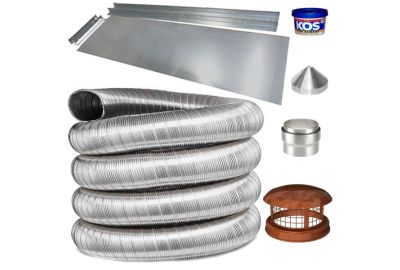
If you're planning to install a wood-burning stove, gas fire, multi-fuel stove, or fireplace, one of the most important questions you'll need to answer is:
What type of flue does my home need?
The answer depends on several factors, including the type of appliance you're installing, whether your property has an existing chimney, and the layout of your home.
Many homeowners are surprised to learn that not every heating appliance requires the same flue system. Choosing the wrong option can affect performance, reduce efficiency, and potentially create safety risks. The good news is that modern flue technology means there's a solution for almost every property, whether you live in a Victorian terrace, a modern new-build, or a countryside cottage.
In this guide, we'll explain everything you need to know about flues, the different systems available, and how to determine which option is right for your home.
What Is a Flue?
A flue is a passage that safely carries smoke, gases, and combustion by-products from a heating appliance to the outside of your property.
Whenever fuel is burned—whether it's wood, gas, coal, or pellets—harmful gases are produced. The flue ensures these gases are safely removed from your home.
A properly functioning flue helps:
Remove smoke and combustion gases
Prevent carbon monoxide build-up
Improve appliance efficiency
Reduce condensation and soot accumulation
Comply with UK Building Regulations
Protect the structure of your chimney and home
Without a suitable flue system, even the most expensive fireplace or stove cannot operate safely or effectively.
Do All Fires Need a Flue?
Not necessarily.
The type of appliance you choose determines whether a flue is required.
Appliances That Usually Need a Flue
Wood-burning stoves
Multi-fuel stoves
Traditional gas fires
Open fires
Biomass appliances
Appliances That May Not Need a Flue
Electric fires
Certain flueless gas fires
Electric fires are particularly popular because they require no chimney, no flue, and minimal installation work.
Homes With Existing Chimneys
If your property already has a masonry chimney, you may be able to use it as part of your installation.
However, older chimneys are rarely suitable for direct use without inspection.
Over time, chimneys can suffer from:
Cracked mortar joints
Internal deterioration
Tar deposits
Blockages
Structural damage
For this reason, installers often recommend fitting a flue liner.
What Is a Flue Liner?
A flue liner is a protective tube installed inside a chimney.
Its purpose is to improve safety and efficiency by creating a smooth, sealed pathway for smoke and gases to travel.
Benefits include:
Improved appliance performance
Better draft and airflow
Reduced risk of chimney fires
Protection for masonry structures
Easier chimney maintenance
Most modern stove installations using existing chimneys will include a new liner.
Types of Flue Liners
Flexible Stainless Steel Liners
The most common option for wood-burning and multi-fuel stoves.
Advantages:
Cost-effective
Suitable for most existing chimneys
Relatively quick to install
Long lifespan when properly maintained
Rigid Stainless Steel Liners
Typically used in commercial installations or new chimney construction.
Advantages:
Extremely durable
Excellent airflow
Long service life
Pumice and Clay Liners
Often found in new-build chimney systems.
Advantages:
Excellent insulation properties
Long-lasting performance
Suitable for solid fuel appliances
Homes Without a Chimney
One of the most common misconceptions is that you need a chimney to install a stove.
In reality, many modern homes successfully accommodate wood-burning and multi-fuel stoves using twin wall flue systems.
What Is a Twin Wall Flue?
A twin wall flue is an insulated stainless steel chimney system designed for properties without traditional chimneys.
The system consists of:
An inner stainless steel flue
High-performance insulation
An outer stainless steel casing
The insulation helps maintain flue gas temperature and improves efficiency.
Benefits of Twin Wall Flue Systems
Twin wall flues offer several advantages:
Flexible Installation
They can run:
Through ceilings and roofs
Through external walls
Along external property walls
Suitable for Most Properties
Twin wall systems are ideal for:
New-build homes
Extensions
Garden rooms
Renovation projects
Barn conversions
Excellent Performance
Insulation helps maintain strong airflow and reduces condensation.
Attractive Appearance
Modern flue systems can complement both contemporary and traditional homes.
Gas Fire Flue Options Explained
Gas fires use different flue systems depending on the appliance design.
Conventional Flue Gas Fires
These appliances use an existing chimney or flue system.
Best suited for:
Traditional homes
Existing fireplace openings
Properties with functioning chimneys
Balanced Flue Gas Fires
Balanced flue appliances are sealed from the room and vent directly through an outside wall.
Advantages include:
High efficiency
Improved safety
No chimney required
Greater installation flexibility
They are increasingly popular in modern homes.
Power Flue Systems
Some gas appliances use powered extraction fans to assist flue performance.
These systems are often used where conventional flue routes are impractical.
Flueless Gas Fires
Flueless gas fires use catalytic converter technology to clean emissions before releasing them into the room.
Benefits include:
No chimney required
High efficiency
Flexible positioning
However, they must meet strict ventilation requirements and should always be professionally installed.
Electric Fires: The No-Flue Option
Electric fires have become one of the fastest-growing fireplace categories in the UK.
Unlike gas or solid fuel appliances, they require:
No flue
No chimney
No ventilation system
No annual chimney sweeping
This makes them ideal for:
Apartments
New-build homes
Media walls
Bedrooms
Home offices
Modern electric fires also offer realistic flame effects and energy-efficient heating options.
What Flue Does a Wood Burning Stove Need?
For wood-burning stoves, the answer depends on your property.
If You Have a Chimney
You'll typically require:
A chimney inspection
A suitable flue liner
Appropriate chimney termination
If You Don't Have a Chimney
You'll usually need:
A twin wall insulated flue system
Roof or wall exit configuration
Compliance with Building Regulations
A professional installer can determine the best route and design.
What Flue Does a Multi-Fuel Stove Need?
Multi-fuel stoves generally use the same flue options as wood burners.
Because these appliances may burn different fuels, installers often recommend flue systems capable of handling higher operating temperatures and varying combustion conditions.
UK Building Regulations for Flues
All stove and fireplace installations must comply with Building Regulations.
Key considerations include:
Flue diameter
Chimney height
Distance from combustible materials
Ventilation requirements
Appliance manufacturer specifications
Working with a qualified installer helps ensure full compliance and peace of mind.
Signs Your Existing Flue Needs Attention
If your property already has a chimney or flue system, look out for:
Smoke entering the room
Difficulty lighting fires
Poor stove performance
Excessive soot deposits
Damp patches around the chimney breast
Strong odours
Crumbling masonry
Visible chimney damage
These issues may indicate the need for repairs, relining, or replacement.
Why a Professional Flue Survey Is Worthwhile
Before purchasing a stove or fireplace, a professional survey can help identify:
Chimney condition
Existing flue suitability
Structural concerns
Ventilation requirements
Installation options
Potential costs
This prevents unexpected issues during installation and ensures the system is designed correctly from the outset.
Frequently Asked Questions
Can I Install a Stove Without a Chimney?
Yes. A twin wall insulated flue system allows wood-burning and multi-fuel stoves to be installed in properties without traditional chimneys.
Do I Need a Flue Liner?
In most cases, yes. If you're using an existing chimney for a stove installation, a flue liner is usually recommended for safety and efficiency.
How Long Does a Flue Liner Last?
A quality stainless steel liner can often last between 10 and 20 years or longer, depending on usage, fuel quality, and maintenance.
Can an Electric Fire Be Installed Anywhere?
Electric fires are among the most flexible heating options available and can be installed in most rooms without a chimney or flue.
How Much Does a Twin Wall Flue Cost?
Costs vary depending on property layout, flue length, and installation complexity. A professional survey can provide an accurate quotation.
How Often Should a Chimney Be Swept?
Most wood-burning stoves should have their chimney swept at least once a year, although frequent users may benefit from more regular maintenance.
Choosing the Right Flue for Your Home
Every home is different, which is why there is no one-size-fits-all answer when it comes to flue systems.
The ideal solution depends on:
Your chosen appliance
Whether you have an existing chimney
Property construction
Installation location
Budget
Future maintenance considerations
Obtaining professional advice before making a purchase can save time, money, and unnecessary complications later.
Need Expert Advice?
At All About Living, we help homeowners choose the perfect fireplace, stove, and flue system for their property. Whether you're installing a wood-burning stove in a period home, creating a modern media wall, or exploring gas and electric fire options, our experienced team can guide you through every step of the process.
Visit our showroom or get in touch today to discuss your project and discover the most suitable flue solution for your home.